


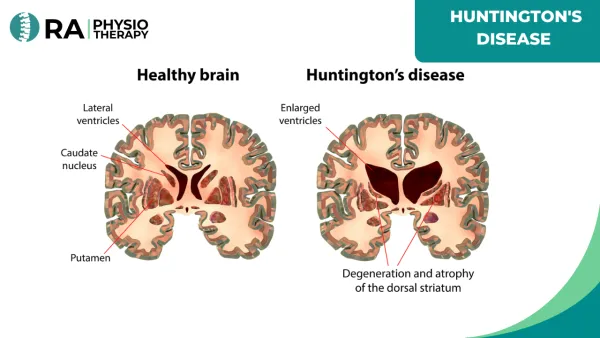
Huntington's Disease (hd)
Huntington’s Disease (HD) Treatment & Physiotherapy RehabilitationHuntington’s Disease (HD) is a progressive neurological disorder that affects movement, coordination, balance, cognition, and behavior. It occurs due to degeneration of nerve cells in the brain and is usually inherited genetically. HD can lead to involuntary movements, muscle weakness, poor balance, difficulty walking, speech problems, and reduced ability to perform daily activities. Physiotherapy rehabilitation plays an important role in maintaining mobility, improving balance, reducing fall risk, and supporting independence and quality of life.
Huntington’s Disease (HD) is a progressive neurological disorder that affects movement, coordination, balance, cognition, and behavior. It occurs due to degeneration of nerve cells in the brain and is usually inherited genetically. HD can lead to involuntary movements, muscle weakness, poor balance, difficulty walking, speech problems, and reduced ability to perform daily activities. Physiotherapy rehabilitation plays an important role in maintaining mobility, improving balance, reducing fall risk, and supporting independence and quality of life.
Common symptoms include:
- Involuntary jerking or uncontrolled movements
- Poor balance and coordination
- Difficulty walking
- Muscle weakness
- Muscle stiffness
- Difficulty with posture and body control
- Fatigue during movement
- Difficulty performing daily activities
- Speech and swallowing difficulties
- Reduced functional independence
Huntington’s Disease may occur due to:
- Genetic inheritance
- Degeneration of brain nerve cells
- Abnormal genetic mutation affecting brain function
Diagnosis includes neurological examination and tests to assess movement, balance, and brain function. Tests may include:
- Neurological examination
- Genetic testing
- MRI scan
- CT scan
- Balance and gait assessment
- Functional mobility evaluation
- Cognitive assessment
Physiotherapy rehabilitation helps maintain mobility, improve balance, reduce stiffness, and support safe movement and independence.
- Gentle stretching techniques
- Positioning techniques
- Heat therapy for muscle relaxation
- Relaxation exercises
Mobility & Functional Training Patients are guided with walking practice, transfer training, posture correction, and safe movement strategies to improve independence.
Customized exercise programs help maintain strength, flexibility, endurance, and functional mobility.
- Lower limb strengthening exercises
- Core stabilization exercises
- Postural strengthening exercises
- Functional movement exercises
- Range of motion exercises
- Flexibility exercises
- Muscle stretching exercises
- Joint mobility exercises
Balance & Coordination Training Balance and coordination exercises help improve walking stability, body control, and reduce the risk of falls.
Walking training helps improve gait pattern, posture, and movement confidence during daily activities.
Breathing exercises and relaxation techniques may help improve body control, reduce tension, and support overall well-being.
- Experienced neuro physiotherapists
- Personalized neurological rehabilitation programs
- One-on-one physiotherapy sessions
- Advanced balance and mobility training techniques
- Focus on improving safety, mobility, and independence
- Evidence-based physiotherapy care
- Guidance for caregivers and home exercise programs
If you or your loved one is experiencing movement difficulties, balance problems, or mobility limitations due to Huntington’s Disease, our physiotherapy team can help support functional recovery and improve quality of life. Book your physiotherapy consultation today for expert Huntington’s Disease rehabilitation and personalized physiotherapy care.
 Emergency No. : +91 93104 16308