


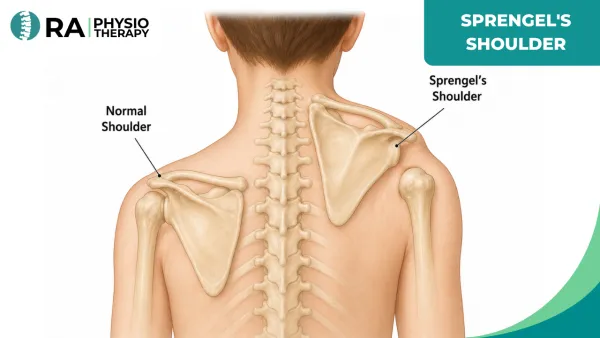
Sprengel's Shoulder
SPRNGEL’S SHOULDER TREATMENT & PHYSIOTHERAPY FOR HIGH SCAPULASprengel’s shoulder, also known as high scapula, is a congenital deformity of the shoulder girdle in which one (or both) scapulae are positioned abnormally high on the back. It is the most common congenital shoulder deformity and occurs due to improper development and descent of the scapula during fetal growth. The affected scapula may be abnormally connected to the spine through fibrous or bony attachments, leading to restricted shoulder movement. In many cases, it is associated with scoliosis, cervical spine abnormalities, and muscle underdevelopment, affecting overall shoulder and neck function.
Sprengel’s shoulder, also known as high scapula, is a congenital deformity of the shoulder girdle in which one (or both) scapulae are positioned abnormally high on the back. It is the most common congenital shoulder deformity and occurs due to improper development and descent of the scapula during fetal growth. The affected scapula may be abnormally connected to the spine through fibrous or bony attachments, leading to restricted shoulder movement. In many cases, it is associated with scoliosis, cervical spine abnormalities, and muscle underdevelopment, affecting overall shoulder and neck function.
Common signs and symptoms include:
- Uneven or asymmetrical shoulders
- Visible raised shoulder blade (high scapula)
- Lump or bulge at the base of the neck
- Restricted shoulder range of motion (ROM)
- Limited shoulder abduction and elevation
- Reduced cervical spine mobility
- Neck stiffness or deformity
- Mild to severe neck tilting (torticollis)
- Muscle weakness around shoulder girdle
- Poor scapular movement
Sprengel’s deformity occurs due to abnormal fetal development of the scapula. Common causes include:
- Developmental defect during early fetal growth
- Genetic abnormalities
- Failure of scapular descent during development
- Associated congenital conditions such as:
o Klippel-Feil syndrome o Scoliosis o Rib abnormalities o Spina bifida o Hemivertebrae o Limb length discrepancy o Muscle hypoplasia (neck and shoulder muscles)
Very Mild
- Shoulders appear level
- Deformity not visible when dressed
Mild
- Shoulders almost level
- Small visible lump when dressed
Moderate
- Shoulder elevated by 2–5 cm
- Deformity clearly visible
Severe
- Marked elevation of scapula
- Superior angle near occiput
- May be associated with neck webbing
- Physical examination of shoulder asymmetry
- X-ray (bone and scapular abnormalities)
- CT scan (associated spinal and skeletal deformities)
- MRI scan (muscle, cartilage, and soft tissue assessment)
Physiotherapy aims to improve shoulder mobility, posture, scapular movement, and functional use of the upper limb.
Heat therapy helps relax tight muscles and prepare the shoulder for exercise. TENS (Pain Relief) Transcutaneous Electrical Nerve Stimulation helps reduce pain and discomfort during rehabilitation. Ultrasound Therapy Helps in reducing soft tissue adhesions and improving tissue flexibility. Mobilization Exercises
- Passive and active range of motion exercises
- Scapular mobilization
- Shoulder abduction and elevation training
- Gradual progression after healing or surgery
Focus on improving flexibility of tight muscles such as:
- Upper trapezius stretching
- Levator scapulae stretching
- Cross-body shoulder stretching
Improve stability and function of shoulder girdle muscles:
- Shoulder shrugs
- Shoulder rotation exercises
- Push-ups and modified weight-bearing exercises
- Isometric and isotonic strengthening
Scapular Control Exercises
- Scapular protraction training
- Posterior tilt exercises
- Controlled scapular stabilization drills
- Reaching activities
- Overhead movement training
- Daily activity integration exercises
Parents play an important role in rehabilitation:
- Supervise all home exercise programs
- Ensure correct scapular movement during exercises
- Avoid compensatory shoulder elevation
- Stop exercises if abnormal scapular movement occurs
- Maintain regular physiotherapy follow-up
- Expert pediatric and orthopedic physiotherapists
- Individualized rehabilitation programs
- Focus on scapular correction and mobility
- Advanced manual therapy and exercise protocols
- Post-surgical rehabilitation expertise
- Parent-guided home exercise training
- Long-term functional improvement approach
Early physiotherapy intervention can significantly improve shoulder function and posture in Sprengel’s shoulder. Book your consultation today for expert evaluation and personalized rehabilitation care.
 Emergency No. : +91 93104 16308