


Tendinitis
TENDINITIS (TENDONITIS) TREATMENT & PHYSIOTHERAPY FOR TENDONINFLAMMATION
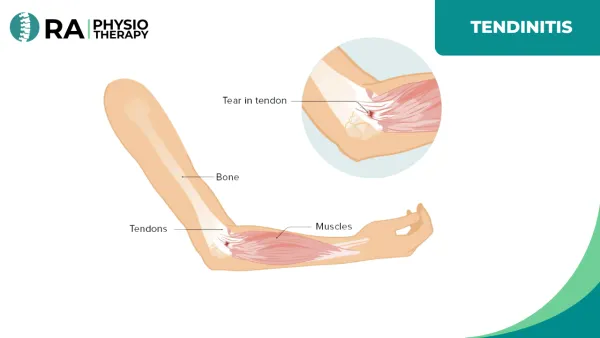
Tendinitis, also known as tendonitis, is the inflammation or irritation of a tendon, which is a strong fibrous tissue that connects muscles to bones. When a tendon becomes inflamed, thickened, or develops micro-tears, it leads to pain, swelling, and difficulty in joint movement. It most commonly affects the shoulder, elbow, wrist, hip, knee, and ankle. Tendinitis is frequently seen in athletes, manual workers, and individuals performing repetitive movements. Age-related degeneration also increases risk due to reduced tendon elasticity. Common types include Achilles tendinitis, tennis elbow, golfer’s elbow, supraspinatus tendinitis, De Quervain’s tenosynovitis, and jumper’s knee.
Common symptoms include:
- Pain around the affected tendon
- Swelling and tenderness
- Redness over the area
- Warmth in the affected region
- Weakness in the involved muscle
- Stiffness and restricted movement
- Pain worsening with activity or overuse
- Difficulty performing repetitive tasks
Condition-Specific Pain Patterns:
- Rotator cuff tendinitis: Shoulder pain radiating to upper arm, worse at night
- Tennis elbow: Outer elbow pain radiating to forearm
- Golfer’s elbow: Inner elbow pain
- Achilles tendinitis: Pain behind heel or lower calf
- Jumper’s knee: Pain above or below kneecap
- De Quervain’s: Pain at thumb base and wrist
- Peroneal tendinitis: Pain behind outer ankle with instability
- Posterior tibial tendinitis: Pain during walking and difficulty standing on toes
Tendinitis is mainly caused by repetitive strain or overload of a tendon. Common causes include:
- Repetitive movements or overuse
- Sports activities (tennis, badminton, running, basketball, golf)
- Poor technique or biomechanics
- Aging and tendon degeneration
- Sudden injury or trauma
- Heavy physical work or lifting
- Inflammatory conditions like rheumatoid arthritis
- Diabetes and metabolic disorders
- Certain medications (e.g., quinolones)
Acute Tendinitis
- Sudden onset
- Often due to injury or overuse
- Pain and inflammation are prominent
Chronic Tendinitis
- Long-term degeneration of tendon
- Repeated micro-tears
- Persistent pain and stiffness
- May lead to tendon weakness or rupture risk
- Physical examination and tenderness assessment
- Pain during resisted movement
- X-ray (to detect calcium deposits)
- MRI scan (to assess tendon swelling or tears)
- Ultrasound imaging (to evaluate tendon inflammation and structure)
Physiotherapy focuses on pain reduction, tendon healing, and restoring function. Rest, Ice, Compression, Elevation (RICE) Initial management to reduce pain and inflammation. Cryotherapy Cold therapy helps reduce swelling, inflammation, and pain.
Heat therapy improves blood circulation, reduces stiffness, and promotes healing. Ultrasound Therapy Helps in tendon healing and reduces inflammation in affected tissues. Shockwave Therapy Stimulates tissue repair, improves circulation, and reduces chronic tendon pain. TENS Therapy Helps reduce pain by modulating nerve signals. Dry Needling Reduces muscle tightness and relieves tendon stress.
Improves blood flow and reduces tension around affected tendons.
- Improve flexibility
- Reduce muscle tightness
- Decrease tendon strain
Eccentric Strengthening Exercises
- Most effective for tendon healing
- Improves tendon load tolerance
- Restores strength and function
Posture & Activity Correction
- Correct biomechanics
- Avoid repetitive overload
- Modify sports/work techniques
- Gradual return to sport or activity
- Load management training
- Balance and coordination exercises
- Expert musculoskeletal physiotherapists
- Advanced pain management techniques
- Personalized rehabilitation programs
- Sports injury rehabilitation expertise
- Focus on long-term tendon healing
- Prevention of recurrence strategies
- Combination of manual therapy and electrotherapy
If you are experiencing persistent tendon pain or movement difficulty, early physiotherapy can prevent worsening and promote faster recovery. Book your consultation today for expert tendinitis treatment and rehabilitation care.
 Emergency No. : +91 93104 16308