


Total Hip Replacement (thr)
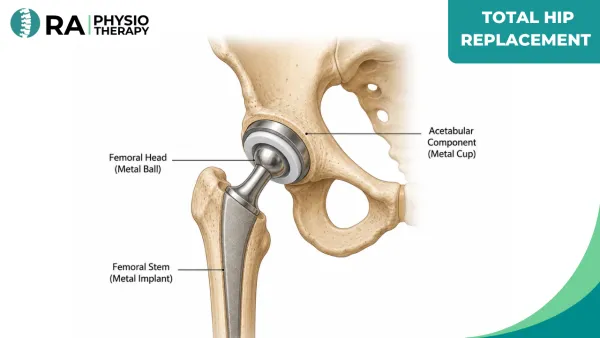
Total Hip Replacement (THR) Rehabilitation & Physiotherapy TreatmentTotal Hip Replacement (THR), also known as hip arthroplasty, is a surgical procedure in which a damaged hip joint is replaced with artificial components made of metal, ceramic, or plastic. The surgery is commonly performed to relieve severe hip pain, stiffness, and difficulty in movement caused by arthritis or hip joint damage. During the procedure, the damaged hip socket and femoral head are removed and replaced with artificial implants to restore hip function and improve mobility. Conditions That May Require Total Hip Replacement THR may be recommended for patients with:
Total Hip Replacement (THR), also known as hip arthroplasty, is a surgical procedure in which a damaged hip joint is replaced with artificial components made of metal, ceramic, or plastic. The surgery is commonly performed to relieve severe hip pain, stiffness, and difficulty in movement caused by arthritis or hip joint damage. During the procedure, the damaged hip socket and femoral head are removed and replaced with artificial implants to restore hip function and improve mobility. Conditions That May Require Total Hip Replacement THR may be recommended for patients with:
- Severe hip arthritis
- Osteoarthritis
- Hip fracture or dislocation
- Avascular necrosis
- Ankylosing spondylitis
- Developmental hip dysplasia
- Bone tumors
- Hip joint degeneration
- Severe hip pain affecting daily activities
Common symptoms include:
- Severe hip pain
- Difficulty walking or climbing stairs
- Hip stiffness and reduced movement
- Pain during sitting or standing
- Limping while walking
- Difficulty performing daily activities
- Loss of balance and mobility
Diagnosis includes physical examination and imaging tests to assess joint damage. Tests may include:
- X-rays
- MRI scan
- Hip movement and strength assessment
Physiotherapy plays an important role after hip replacement surgery to improve strength, mobility, balance, and walking ability. Pain & Swelling Management
- Ice therapy to reduce swelling and pain
- Heat therapy for muscle relaxation
- Ultrasound therapy
- Laser therapy for healing
- NMES (Neuromuscular Electrical Stimulation) for muscle activation
Early Rehabilitation (0–4 Weeks)
- Ankle pumps
- Quadriceps strengthening
- Gluteal strengthening exercises
- Assisted hip movements
- Walking with walker support
- Gentle range of motion exercises
Intermediate Rehabilitation (4–8 Weeks)
- Mini squats
- Bridges
- Straight leg raises
- Standing hip exercises
- Balance training
- Walking progression exercises
Advanced Rehabilitation (8–12 Weeks)
- Theraband strengthening exercises
- Step-up exercises
- Hip strengthening exercises
- Endurance training
- Functional mobility exercises
- Gait and balance training
Patients are advised to:
- Avoid crossing legs
- Avoid low chairs or deep sitting
- Avoid sudden twisting movements
- Use walking support as advised
- Follow weight-bearing instructions carefully
- Continue home exercise program regularly
Some complications may include:
- Joint infection
- Swelling and stiffness
- Deep vein thrombosis (DVT)
- Implant loosening
- Limited hip movement
- Muscle weakness
- Balance problems
Regular physiotherapy and follow-up care help reduce complications and improve recovery.
- Experienced orthopedic physiotherapists
- Personalized post-surgical rehabilitation programs
- Advanced pain management therapies
- One-on-one physiotherapy sessions
- Focus on improving walking and mobility
- Evidence-based rehabilitation protocols
- Guidance for safe recovery and daily activities
If you are recovering from hip replacement surgery or suffering from severe hip pain, our physiotherapy team can help you regain strength, mobility, and confidence. Book your physiotherapy consultation today for expert Total Hip Replacement (THR) rehabilitation and recovery care.
 Emergency No. : +91 93104 16308