


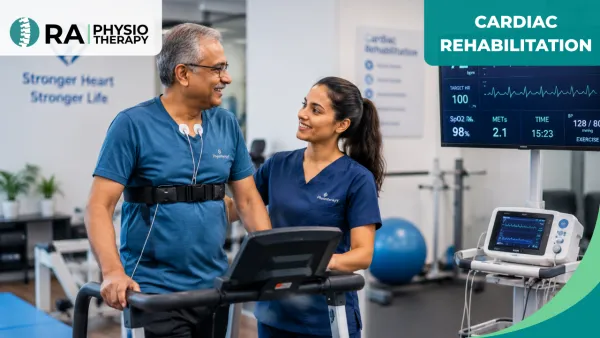
Cardiac Rehabilitation
Specialized Physiotherapy for Heart Health & RecoveryCardiac Rehabilitation is a structured physiotherapy and exercise-based program designed to help patients recover safely after heart-related conditions or cardiac surgeries. It focuses on improving cardiovascular fitness, physical endurance, strength, breathing capacity, and overall functional independence while reducing the risk of future cardiac complications. Cardiac Rehabilitation combines monitored exercise training, lifestyle modification, education, and recovery strategies to help patients return safely to daily activities and improve long-term heart health.
Cardiac Rehabilitation is a medically supervised rehabilitation program designed for individuals recovering from heart disease, cardiac surgery, or cardiovascular procedures.
The program helps improve:
- Heart function and circulation
- Physical stamina and endurance
- Breathing efficiency
- Muscle strength and flexibility
- Energy levels and mobility
- Overall cardiovascular health
Cardiac Rehabilitation also supports patients emotionally and physically during recovery, helping them regain confidence and return safely to normal activities.
Cardiac Rehabilitation is commonly recommended after the following procedures:
Angioplasty: A minimally invasive procedure where a balloon is used to widen narrowed arteries. A stent is often inserted to keep the artery open and improve blood flow.
Coronary Artery Bypass Graft (CABG): CABG surgery uses blood vessels from another part of the body to bypass blocked coronary arteries and restore blood supply to the heart.
Valve Replacement Surgery: Damaged heart valves are replaced with artificial or biological valves to improve heart function and circulation.
Pacemaker Implantation: A pacemaker is an electrical device implanted to regulate abnormal heart rhythms and maintain proper heartbeat control.
Cardiac Rehabilitation provides several physical and functional benefits, including:
- Improves cardiovascular endurance
- Enhances heart and lung efficiency
- Improves circulation and oxygen delivery
- Increases stamina and energy levels
- Improves flexibility and joint mobility
- Improves muscular strength and endurance
- Supports safe return to daily activities
- Helps maintain healthy body weight
- Reduces fatigue and shortness of breath
- Prevents future cardiac complications
- Reduces the risk of recurrent cardiac events
- Improves confidence and quality of life
Cardiac Rehabilitation follows a structured and monitored exercise program under physiotherapy supervision. The rehabilitation session generally includes:
1. Warm-Up Exercises: Gentle stretching and mobility exercises prepare the body safely for physical activity. Helps: Improve circulation, Reduce injury risk, Prepare muscles and joints for exercise.
2. Cardiovascular Exercises: Aerobic exercises improve heart and lung efficiency. Common Cardio Exercises: Walking, Stationary Cycling, Treadmill Training, Low-Impact Aerobics, Swimming, Step Exercises. These exercises help strengthen the cardiovascular system safely and gradually.
3. Strengthening Exercises: Strength training improves muscular endurance and overall physical function. Benefits: Improves muscle strength, Enhances functional independence, Improves physical capacity for daily tasks.
4. Cool-Down Exercises: Light exercises and breathing techniques help the body recover safely after activity. Helps: Normalize heart rate, Improve recovery, Reduce dizziness or fatigue.
Before, during, and after exercise sessions, important health parameters are monitored:
- Blood Pressure
- Heart Rate
- Oxygen Levels
- Fatigue Level
- Exercise Tolerance
- Breathing Response
This ensures exercises are performed safely and within comfortable limits.
Cardiac Rehabilitation programs commonly follow the FITT principle:
F - Frequency: How often exercises are performed. Usually 5-7 days per week for aerobic exercises.
I - Intensity: How hard the exercise should be. Exercises are generally performed at moderate intensity where conversation remains comfortable.
T - Time: How long the exercise session lasts. Typically 30-60 minutes per session. Exercise sessions may also be divided into shorter intervals throughout the day.
T - Type: The type of exercise performed. Common Activities: Walking, Cycling, Swimming, Treadmill Training, Light Aerobic Exercise.
Aerobic Interval Training (AIT): Alternates periods of moderate exercise with lighter recovery periods. Benefits: Improves cardiovascular fitness safely, Enhances exercise tolerance, Helps improve endurance gradually. AIT is commonly used for patients recovering from cardiovascular conditions.
Cardiac Rehabilitation is beneficial for patients with:
- Coronary Artery Disease
- Heart Attack Recovery
- Heart Failure
- Angioplasty & Stent Procedures
- Coronary Artery Bypass Surgery (CABG)
- Heart Valve Surgery
- Angina (Chest Pain)
- Cardiomyopathy
- Peripheral Artery Disease
- Pulmonary Hypertension
- Heart or Lung Transplant Recovery
Cardiac Rehabilitation is suitable for:
- Patients recovering from cardiac surgery
- Individuals with heart disease
- Patients with reduced exercise tolerance
- Elderly individuals with cardiovascular conditions
- Individuals recovering from heart attack
- Patients with breathing difficulty during activity
- Patients needing monitored exercise programs
Both men and women of all age groups can benefit from supervised cardiac rehabilitation.
Initial Assessment: A physiotherapist evaluates: Medical history, Heart condition, Exercise tolerance, Strength and mobility, Functional limitations.
Customized Exercise Program: A personalized rehabilitation plan is created based on: Cardiac condition, Fitness level, Recovery stage, Functional goals.
Supervised Therapy Sessions: Sessions include: Aerobic training, Strengthening exercises, Flexibility exercises, Breathing training, Functional mobility exercises.
Progress Monitoring: Regular monitoring helps track: Endurance improvement, Strength gains, Exercise tolerance, Recovery progression.
Session Duration: Typically 30-60 minutes
Frequency: Usually 3-5 sessions per week depending on medical advice and recovery stage.
Rehabilitation Duration: May continue for several weeks to months depending on the condition and goals.
- Experienced Cardiac Rehabilitation Physiotherapists
- Personalized Recovery Programs
- Safe & Monitored Exercise Sessions
- Evidence-Based Rehabilitation Protocols
- Focus on Long-Term Heart Health
- One-on-One Physiotherapy Care
- Advanced Rehabilitation Equipment
- Holistic Recovery Approach
Recover safely, improve heart health, and regain confidence with expert Cardiac Rehabilitation. Book your Cardiac Rehabilitation session today for supervised physiotherapy care designed to improve endurance, restore strength, enhance cardiovascular fitness, and support long-term recovery.
 Emergency No. : +91 93104 16308