


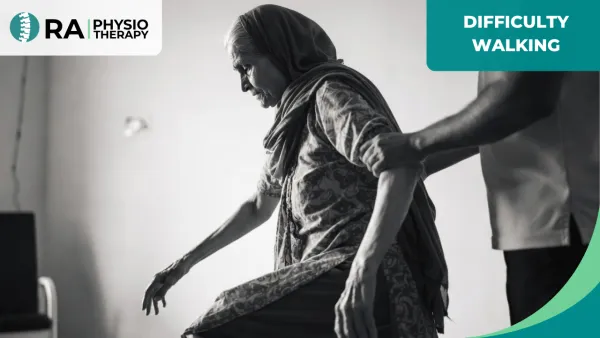
Difficulty Walking
Gait Training and Mobility Programs for Walking DifficultiesDifficulty walking is a symptom that affects a person's ability to walk normally, comfortably, or safely. It may involve pain, weakness, imbalance, or stiffness.
Difficulty walking is a symptom that affects a person’s ability to walk normally, comfortably, or safely. It may involve pain, weakness, imbalance, stiffness, limping, reduced coordination, or instability while walking.
Walking difficulties can develop gradually or suddenly depending on the underlying cause. The problem may affect mobility, independence, balance, and daily activities such as climbing stairs, standing for long periods, or moving around safely. Difficulty walking can occur due to muscle weakness, joint pain, neurological disorders, balance problems, injury, or age-related mobility decline. In some cases, walking problems may also be associated with dizziness, poor posture, numbness, or reduced strength in the legs.
Difficulty walking can occur due to several muscular, neurological, joint, and balance-related conditions. Common causes include:
- Muscle weakness
- Joint pain or stiffness
- Arthritis
- Stroke
- Parkinson’s disease
- Balance disorders
- Vertigo
- Nerve compression or nerve damage
- Sciatica
- Back pain
- Hip, knee, or ankle problems
- Poor coordination
- Sports injuries
- Post-surgical weakness
- Age-related mobility decline
In some cases, walking difficulties may develop due to reduced flexibility, pain, or impaired movement control.
Risk Factors
- Aging
- Sedentary lifestyle
- Muscle weakness
- Neurological disorders
- Joint degeneration
- Poor posture
- Obesity
- Previous injuries or surgeries
- Balance problems
- Lack of physical activity
Prevention Tips
- Stay Physically Active: Regular exercise helps maintain mobility, balance, and muscle strength.
- Strengthen Leg & Core Muscles: Strong muscles improve walking stability and coordination.
- Practice Balance Exercises: Balance training helps reduce instability and fall risk.
- Maintain Healthy Body Weight: Reducing excess weight decreases stress on joints and muscles.
- Stretch Regularly: Stretching exercises help maintain flexibility and smooth movement.
- Wear Proper Footwear: Supportive footwear improves walking posture and stability.
Physiotherapy is highly effective in improving walking ability, balance, coordination, strength, and overall mobility. A physiotherapist evaluates posture, gait pattern, muscle strength, flexibility, balance, and movement limitations before designing a personalized rehabilitation program.
Physiotherapy treatments may include:
- Gait Training: Helps improve walking posture, coordination, and movement efficiency.
- Strengthening Exercises: Improves muscle support and lower limb stability.
- Balance & Coordination Training: Enhances body control and movement confidence.
- Stretching Exercises: Improves flexibility and reduces stiffness.
- Functional Mobility Training: Improves movement during daily activities and walking tasks.
- Neurological Rehabilitation: Specialized exercises help improve mobility in neurological conditions.
- Posture Correction: Improves body alignment and walking mechanics.
- Fall Prevention Training: Helps reduce the risk of falls and movement-related injuries.
The goal of physiotherapy is to improve walking ability, restore mobility, enhance balance, and improve independence during daily activities.
Consult a healthcare professional or physiotherapist if:
- Walking becomes painful or difficult
- Balance problems develop
- Frequent falls or instability occur
- Leg weakness or numbness develops
- Walking speed reduces significantly
- Daily activities become difficult
- Symptoms worsen over time
- Difficulty walking develops after injury or illness
Early physiotherapy intervention can help improve recovery and prevent mobility complications.
 Emergency No. : +91 93104 16308